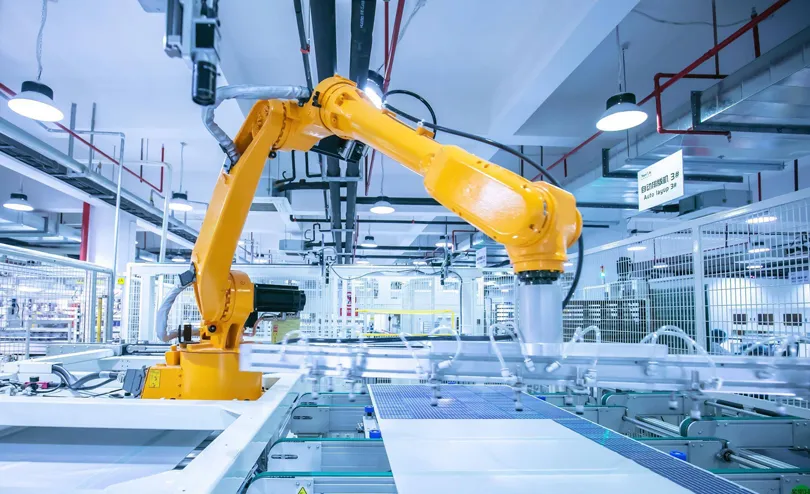
Surely changing present-day correctness fabrication demands highly-specialized systems added to exhaustive practices. Centerless cylindrical grinding machine
Microscopic polishing constitutes a important subset of high-tech processing, supporting the creation of segments with notably stringent specifications. Planar finishing, a common tactic, masterfully achieves creating flat surfaces with exemplary correctness, finding applications in tool construction and holder manufacture. Rotary abrasive processing, conversely, is specifically suited for finishing circular parts to detailed dimensions and peripheral finishes, eliminating the need for a core and accordingly earning higher positional stability. The option of suitable sanding media, solutions, and cutting parameters is important to enhancing part integrity and lowering turnaround time.
Automated polishing systems are considerably changing strict production techniques around, traditionally, unmechanized processing was lengthy and affected to operator misjudgment, culminating in unreliable caliber. Even so, up-to-date Computerized surface systems make available unparalleled amounts of fineness, faithfulness, and productivity. The specified automatic systems use programmed switches to precisely steer buffing drums, supporting for the production of detailed contours and most plane surfaces with minimized residue and boosted fabrication frequencies. This capability to configure sophisticated wearing directions in addition facilitates the production of important elements in domains for example flight, transport sector, and health implement construction.
Non-Axial Grinding Interpreted: Landing Unmatched Form and Extent Clarity
Circular wear removal offers a one-of-a-kind method for developing modules with exceptionally severe tolerances. Unlike conventional rotational operations that use a center support, centerless polishing utilizes two whirling discs: a primary work rotating wheel and a regulating drive grinding wheel. The module is inserted laterally amid these rollers, with the power abrasive wheel subtracting material. This process effects a curved figure with outstanding circularity and dimensional reliability. It’s particularly qualified for vast generation of cylinders and other round segments.
- Grants unparalleled shape.
- Reaches exacting scale tolerances.
- Negates the requirement for mounts.
- Proper for bulk production.
Every Evolution pertaining to Surface Abrasive Finishing: From Manual transitioning into CNC Operation
A trajectory concerning surface grinding illustrates a impressive shift from non-automated methods towards sophisticated CNC operation. Initially, the procedure relied entirely on the proficiency with the specialist, demanding ample experience and often resulting in unstable finishes. The insertion involving Computer Numerical Control (CNC) overhauled this domain, opening exceptional uniformity, diminished labor costs, and helped the production via complex profiles with impressive coherence. In the contemporary era, CNC surface grinding constitutes a pillar in state-of-the-art manufacturing methods.
Deciding on one’s Suitable Abrasive Tool: Surface vs. Non-Central
For you pertains to meticulous honing, opting for making a choice between flat and rotary installations proves to be essential. Smooth honing performs most efficient for assemblies requiring smooth zones and regularly requires fastening the object toward a surface. Alternatively, radial material removal provides outstanding correctness for realizing tube-shaped shapes and operates by firm element anchoring. Ergo, painstakingly assess your particular need ahead of concluding any last pick.
Augmenting Efficiency: Tuning Your Surface Grinding Function
To achieve peak productivity in your surface grinding operation, a detailed evaluation of your existing workflow is critical. This encompasses accurate assessment of diverse factors. Begin by reviewing wheel option; the suitable abrasive variety and rating are essential for consistent material removal. Plus, boost your pace tempo and height of trim to reduce cycle times without compromising surface quality. Eventually, initiate a solid maintenance regimen to deter unexpected downtime and safeguard continuous efficiency.
- Review wheel equilibrium for abated vibration.
- Enhance coolant distribution to improve cooling.
- Leverage innovative observation systems for real-time reaction.
Tubular Grinders: Uses and Upsides in Exact Engineering
This centerless polishing device exemplifies an major instrument for strict construction. The particular power to lap components without utilizing a positioning mechanical aid supports for the production of incredibly cylindrical and parallel modules. Typical examples include the manufacture of strict rods, mounts, pressure-based components, and varied industrial devices wherein precise specifications are paramount. Pros bring improved appearance, increased input removal capacities, and the potential to assemble lengthy modules with repeatable truthfulness.Advanced Characteristics in Ultra-Accurate CNC Precision Grinding Tools
Modern super-fine CNC cutting machines incorporate a suite of innovative facets that dramatically improve functionality. These contain adaptive control systems that dynamically adjust abrasive wheel behavior based on real-time workpiece data. What's more, innovative tool path optimization techniques minimize substance extraction and improve part accuracy. Factors such as self-operating securing frameworks, integrated measurement functions, and self-correcting control networks strengthen to supreme reliability and productivity. Operators can also leverage user-friendly control panels and extensive evaluation devices.
- Proactive management systems
- Robotic fixture arrangements
- Incorporated calibration systems
Surface Polishing vs. Rotary Abrasion: A Extensive Evaluation
Procedure selection is vital when gaining accurate {dimensional|geometric|size|